What is platelet-rich plasma (PRP)?
PRP is a concentrate of a patient's own platelets in plasma. Here is what it is, what makes it rich, where it came from and where it sits among other treatments.
Key takeaways.
- PRP is an autologous blood product, meaning it is made from the patient's own blood.
- The most widely accepted definition is plasma with a platelet count 3 to 5 times the whole-blood baseline.
- Platelets carry three types of granules that store growth factors and other signaling molecules.
- The term dates from 1970s hematology, and clinical interest grew over the following decades.
- No single platelet threshold has been validated as a universal standard.
- PRP is classed as a blood product, and its clinical applications are considered off-label.
What PRP is
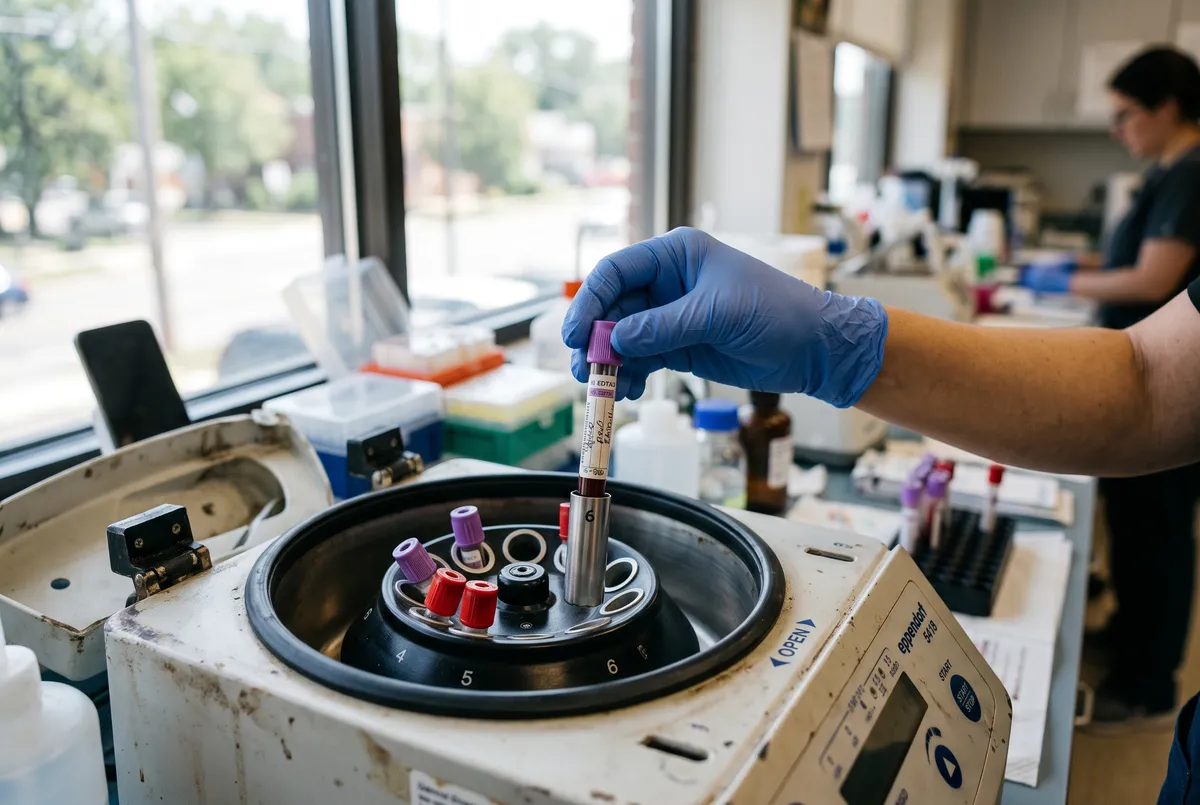
Platelet-rich plasma (PRP) is an autologous blood product. Autologous means it comes from the same person who receives it. Blood is drawn and spun in a centrifuge, which yields a plasma fraction with more platelets than normal blood.
The plasma is more than a carrier. It contains fibrinogen, a clotting protein that can act as a temporary scaffold, along with albumin, immunoglobulins and enzymes.
What makes it rich
The most widely accepted definition describes PRP as plasma with a platelet concentration 3 to 5 times higher than the baseline count in whole blood. How concentrated PRP should be is still debated.
More is not automatically better. The course material notes research suggesting that very high platelet concentrations can inhibit some cell activity. It also notes that an early threshold from the late 1990s is often cited but has not been validated in systematic comparative studies.
Why platelets matter
Platelets contain three types of storage granules: alpha, dense and lysosomal. These hold growth factors, bioactive molecules and enzymes involved in tissue healing. PRP research is built on the idea of delivering these signals in concentrated form.
Preparations differ. Some contain few white blood cells, some contain many, and some form a fibrin matrix. These variants have different properties.
Where PRP came from and where it sits
The term platelet-rich plasma was coined in hematology in the 1970s to describe blood with a higher platelet count than normal. Milestones that followed include use in cardiac surgery in 1987, bone regeneration work in 1998, and later adoption in sports medicine.
PRP sits between conservative care and simple injections on one side, and cellular therapies on the other. It can be prepared at the point of care from the patient's own blood. It is classed as a blood product and PRP applications are considered off-label.
Educational content for healthcare professionals. Not a treatment recommendation. PRP applications are considered off-label.
This guide covers the what and the why.
The how is taught live. The webinar and live training go deeper on:
- Target platelet ranges for different uses
- How preparation method changes the final product
- Choosing between PRP variants
- Explaining off-label status to patients
Common questions.
How many platelets does plasma need to count as PRP?
Is PRP made from the patient's own blood?
Is PRP FDA-approved?
Sources
- Mościcka P, Przylipiak J, Bogucka M, et al. History of autologous platelet-rich plasma: A short review. J Cosmet Dermatol. 2021;20(12):3806-3809.
- Everts P, Onishi K, Jayaram P, et al. Platelet-Rich Plasma: New Performance Understandings and Therapeutic Considerations in 2020. Int J Mol Sci. 2020;21(20):7794.
- Alves R, Grimalt R. A Review of Platelet-Rich Plasma: History, Biology, Mechanism of Action, and Classification. Skin Appendage Disord. 2018;4(1):18-24.
Keep reading.
PRP · 3 min read
Platelet biology: what clinicians need to know for PRP
Platelets are small cell fragments that sense injury and release stored growth factors. This guide covers their structure, activation and contents.
Start the lessonPRP · 3 min read
How is PRP prepared and classified?
PRP is made by drawing blood and separating it by centrifugation. Preparation varies widely, which is why classification systems and quality control matter.
Start the lessonPRP · 3 min read
How is PRP thought to work? Proposed mechanisms of action
Research describes four linked mechanisms for PRP: tissue repair signaling, new vessel formation, immune modulation and anti-inflammatory effects.
Start the lessonReady for the hands-on detail?
Live on Zoom, Tuesdays at 12:00 PM ET. See how the model works before you commit to anything.