PRP for osteoarthritis beyond the knee: hip, shoulder, ankle and hand
PRP evidence in osteoarthritis is joint-specific. Knee data are strongest, hip and shoulder results resemble hyaluronic acid, and a key ankle trial found no benefit over saline.
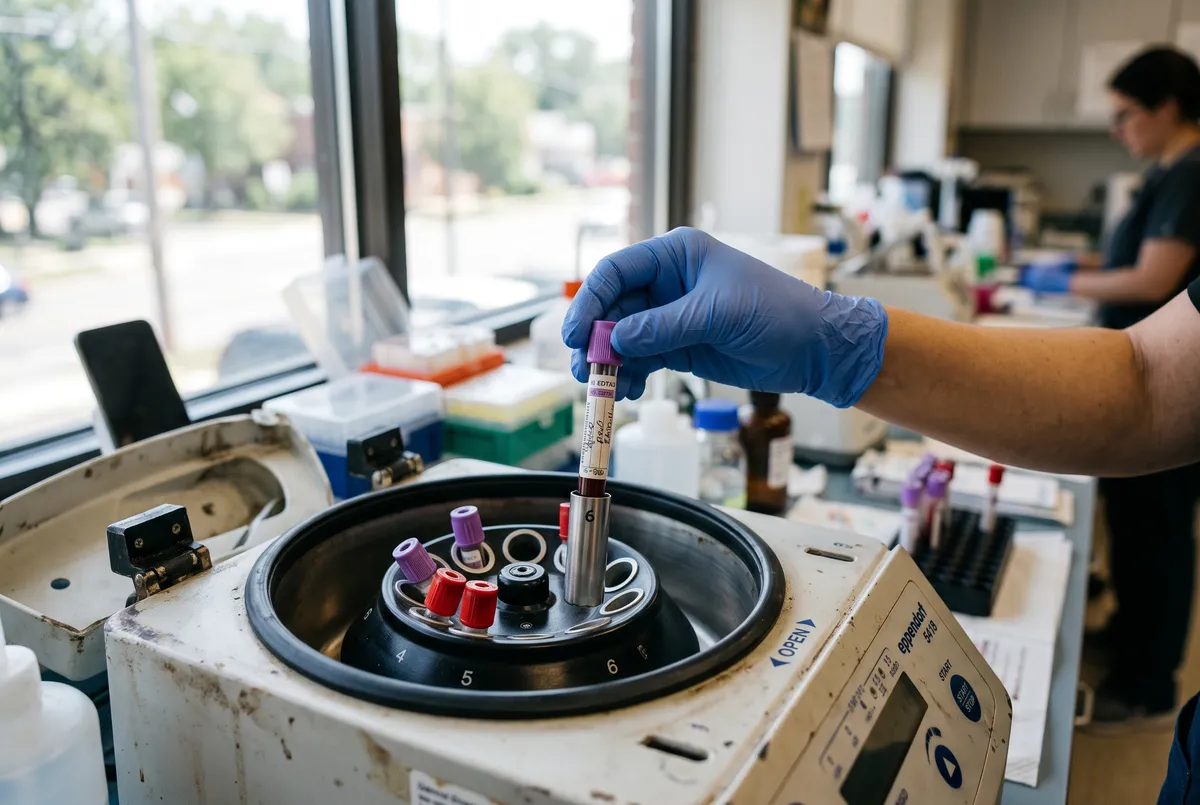
Key takeaways.
- Findings from knee osteoarthritis do not automatically apply to other joints.
- Reviews report the most benefit in early to moderate disease, Kellgren-Lawrence grades I to III.
- In hip osteoarthritis, studies report outcomes similar to hyaluronic acid.
- A shoulder trial found improvement with both PRP and hyaluronic acid, with minimal difference between them.
- A placebo-controlled ankle trial found no significant benefit of PRP over saline.
- Thumb base osteoarthritis shows more promising results, from a smaller evidence base.
How PRP is thought to act in a joint
Osteoarthritis affects cartilage, the synovium (joint lining), the bone under the cartilage and nearby tissue. Platelet-rich plasma (PRP) contains growth factors such as TGF-beta that signal to chondrocytes (cartilage cells) and synovial cells.
The proposed effects are on cartilage maintenance and on inflammation inside the joint. These mechanisms are the same in every joint. Clinical results are not.
Disease stage matters
The Kellgren-Lawrence (KL) scale is the most widely used X-ray grading of osteoarthritis. It runs from grade 0, a normal joint, to grade IV, advanced disease.
Systematic reviews consistently report that PRP studies show the most benefit in grades I to III, with diminishing returns in grade IV.
Evidence joint by joint
Knee osteoarthritis has the largest evidence base. In the hip, studies report improvement from baseline, but many lacked control groups, and comparative data show outcomes similar to hyaluronic acid. In the shoulder (glenohumeral joint), a 2022 randomized trial of 70 people found that PRP and hyaluronic acid performed about equally.
The ankle is the cautionary case. A 2023 double-blind, placebo-controlled trial found no significant benefit of PRP over saline injection. In the thumb carpometacarpal joint, early results are more promising, though the research is limited.
Combining PRP with hyaluronic acid is also under study, based on the idea that the two act through different pathways.
Delivery and regulatory status
Injection accuracy varies by joint. Deep joints such as the hip, shoulder and ankle are usually injected under ultrasound or fluoroscopy guidance.
PRP applications are considered off-label. Informed consent should reflect the evidence for the specific joint being treated.
Educational content for healthcare professionals. Not a treatment recommendation. PRP applications are considered off-label.
This guide covers the what and the why.
The how is taught live. The webinar and live training go deeper on:
- Reading radiographs and grading osteoarthritis for patient selection
- Ultrasound and fluoroscopy guidance for deep joints
- Joint-specific preparation and injection protocols
- PRP and hyaluronic acid combination approaches
- Outcome measures and follow-up planning
Common questions.
Does PRP help ankle osteoarthritis?
Is PRP better than hyaluronic acid for hip or shoulder osteoarthritis?
Which osteoarthritis grades are studied most with PRP?
Sources
- Paget LDA, et al. (2023). Effect of platelet-rich plasma injections vs placebo on ankle symptoms and function in individuals with ankle osteoarthritis: a randomized clinical trial. JAMA, 330(16):1648-1657.
- Sánchez M, et al. (2022). Efficacy of ultrasound-guided glenohumeral joint injections of leukocyte-poor platelet-rich plasma versus hyaluronic acid in the treatment of glenohumeral osteoarthritis: a randomized, double-blind controlled trial. J Shoulder Elbow Surg, 31(11):2367-2378.
- Andia I, Maffulli N. (2013). Platelet-rich plasma for managing pain and inflammation in osteoarthritis. Nat Rev Rheumatol, 9(12):721-730.
Keep reading.
PRP · 3 min read
PRP for back pain: discs, facet joints and the sacroiliac joint
PRP is being studied for three spinal pain sources: discs, facet joints and the sacroiliac joint. Early results are encouraging, but the trials are small and not standardized.
Start the lessonPRP · 3 min read
Does PRP help fractures heal? The evidence on bone healing and non-union
PRP for bone healing has a clear rationale but a contradictory evidence base. Non-union data are the most supportive, and routine use in ordinary fractures is not supported.
Start the lessonPRP · 3 min read
PRP for wound healing: diabetic ulcers, venous ulcers and burns
Wound care is one of the more researched PRP uses. Meta-analyses in chronic ulcers report better healing, but protocols differ widely and standard wound care still comes first.
Start the lessonReady for the hands-on detail?
Live on Zoom, Tuesdays at 12:00 PM ET. See how the model works before you commit to anything.