PRP for wound healing: diabetic ulcers, venous ulcers and burns
Wound care is one of the more researched PRP uses. Meta-analyses in chronic ulcers report better healing, but protocols differ widely and standard wound care still comes first.
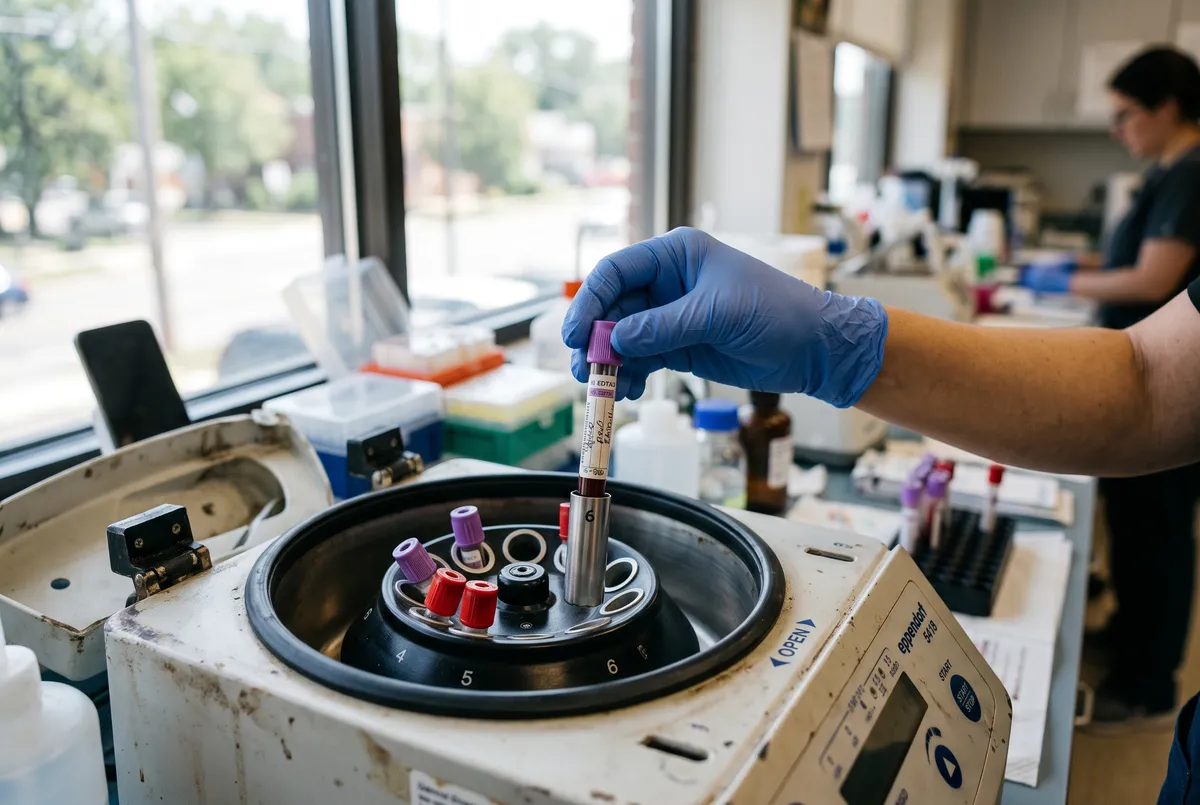
Key takeaways.
- PRP delivers platelet growth factors that take part in each phase of normal wound healing.
- Meta-analyses of randomized trials in diabetic foot ulcers report higher healing rates with PRP.
- Reviews in venous leg ulcers and in combination with negative pressure therapy also report benefit.
- There is no standardized protocol, so studies are hard to compare.
- PRP does not replace infection control, offloading and other standard wound care.
- PRP applications are considered off-label.
How PRP relates to wound biology
Normal wound healing moves through hemostasis (clotting), inflammation, proliferation and remodeling. In chronic wounds this sequence is disrupted.
Platelet-rich plasma (PRP) supplies concentrated growth factors from the patient's own platelets. One example is platelet-derived growth factor (PDGF), which attracts immune cells and fibroblasts to a wound and stimulates collagen production and new vessel growth.
Evidence in chronic wounds
Diabetic foot ulcers are the most studied chronic wound. A 2023 meta-analysis of randomized trials concluded that PRP improved healing rate and shortened healing time without increasing adverse events.
A 2024 systematic review of randomized trials in venous ulcers also reported increased healing with PRP. Another 2024 meta-analysis looked at PRP combined with negative pressure wound therapy in chronic refractory wounds and reported shorter healing time. Evidence for pressure ulcers is more limited.
Burns, scars and acute wounds
PRP has also been studied in traumatic wounds, burns and scar management. For burns, the course material notes that superficial burns heal on their own and PRP is not indicated for them. Interest centers on deeper burns.
In scarring, PRP is being studied both for prevention during healing and for revision of established scars.
Limits and safe use
The main weakness of this literature is the lack of standardization. Studies differ in how PRP is prepared, whether it is injected or applied topically, how often it is used and how outcomes are measured.
PRP is an addition to standard wound care, not a substitute. The course material states that PRP should not be applied to actively infected wounds, and that pressure offloading for diabetic foot ulcers cannot be skipped. PRP applications are considered off-label.
Educational content for healthcare professionals. Not a treatment recommendation. PRP applications are considered off-label.
This guide covers the what and the why.
The how is taught live. The webinar and live training go deeper on:
- Wound assessment and bed preparation before PRP
- Preparation methods and activation choices for wound care
- Application techniques by wound type
- Combining PRP with negative pressure and other advanced therapies
- Treatment schedules and monitoring
Common questions.
Is there evidence for PRP in diabetic foot ulcers?
Can PRP be used on an infected wound?
Is there a standard PRP protocol for wounds?
Sources
- Li T, et al. Efficacy and safety of autologous platelet-rich plasma for diabetic foot ulcer healing: a systematic review and meta-analysis of randomized controlled trials. J Orthop Surg Res. 2023;18:384.
- Ebrahimi H, et al. Efficacy and safety of platelet-rich plasma in the treatment of venous ulcers: A systematic review and meta-analysis of randomized controlled trials. Int Wound J. 2024;21(2):e14467.
- Peng Y, et al. The Efficacy and Safety of Negative-Pressure Wound Therapy Combined With Platelet-Rich Plasma in Chronic Refractory Wounds: A Systematic Review and Meta-Analysis of Randomized Controlled Trials. Adv Skin Wound Care. 2024;37(11):1-10.
Keep reading.
PRP · 3 min read
PRP in aesthetic medicine: evidence for skin, hair and scars
PRP is widely used for facial rejuvenation, hair loss and acne scars. Reviews report improvements, but most studies are uncontrolled and the certainty of evidence is low.
Start the lessonPRP · 3 min read
PRP for sexual wellness: what is known and what is still investigational
PRP is being studied for erectile dysfunction and several female pelvic health conditions. The evidence is early, and urology societies still class these uses as experimental.
Start the lessonPRP · 3 min read
How is PRP administered? Image guidance and delivery routes
PRP can be delivered by image-guided injection, topically or during surgery. Here is why delivery accuracy matters and what the safety principles are.
Start the lessonReady for the hands-on detail?
Live on Zoom, Tuesdays at 12:00 PM ET. See how the model works before you commit to anything.